Several years ago, when I was a young pastor serving in a congregation, a member came to tell me he was leaving the church for another one. When I asked why, he said, “I don’t like all the lovey-dovey stuff.” I was caught off guard and didn’t have a very good response in the moment. Now I wish I had said something like, “When you say ‘lovey, dovey’ are you referring to the Sermon on the Mount when Jesus says we are to love even our enemies? Or when Jesus says his new command is that we love one another as he has loved us? Or when Jesus, hanging on the cross, says, ‘Father, forgive them?’ Or when the risen Jesus shows up on the shore, feeds his friends, and asks Peter – three times – ‘Do you love me?’ Or, maybe you mean Paul, who says that you can have all kinds of gifts and accomplishments, but without love, you are nothing. Or when Paul writes that out of faith, hope, and love, love is the greatest or …”. You get the idea. But I didn’t have those words that day.
Now, several years later, I wish I could answer him again. Because as much as he thought he was rejecting something weak, living into God’s expansive love is anything but. It can be beautiful and life-giving, yes – but it is also demanding and hard. Especially when that love calls us to care for people we don’t particularly like, let alone agree with.
Today, in this fractured time, in this fractured world, how do we live into being ‘lovey-dovey’ in the way God first shows us through Jesus? How do we love when we’re afraid? How do we love those who are causing real harm? How do we love people with whom we feel uncomfortable or “icky?” How do we love those we would rather avoid? How do we love those we despise?
First, we have to be honest with ourselves. As clearly as we may see the sin of others, we also must acknowledge our own. We fall short time and time again. We cannot justify ourselves out of sin, nor can we place ourselves above anyone else. God is the one who comes in Jesus to bring wholeness, reconciliation, and salvation – not just to some, but to the whole world (John 3:16-17).
Second, every person is made in the image of God. Every person is a small miracle. God formed each person with care and intention. Every person, all eight billion of us on this planet, are a wonder and a joy to God. God loves each person beyond measure. God loves those fleeing countries (like Moses and the holy family). God loves those tangled up in messes of their own making (like David). God loves those who are trying their very best (like Martha). God even loves those who would rather scroll on their phones than engage (well … for a scriptural reference perhaps this could be those churches in Revelation who are neither hot nor cold). God loves us all. Thank God!
And because of God’s amazing love, we are called to listen to one another and open our hearts to one another. This, of course, also means speaking up when there is injustice or harm – not out of hatred but out of love. Love rooted in Christ requires us to name and resist when harmful decisions made by those in power damage lives, especially when those decisions fall hardest on people who have been marginalized, silenced or erased. Love rooted in Christ pushes us to advocate for policies and practices that move people and systems toward equity and inclusion – whether we are talking about immigrants or farmers, children or grandmothers, those with homes and those without – neighbors all.
Third, we cannot love as God calls us to love on our own (see #1 above). We need the Holy Spirit and we need community. We need one another for accountability, and we need each other to help us journey forward together – beyond fear, beyond hatred, beyond the walls that we so easily build. Love cannot remain theoretical and abstract. No. Love is gritty and enfleshed.
As we begin 2026, I pray that, through the Holy Spirit, we love God and one another in our words and our actions. I pray that we practice loving all – even our enemies. And I pray that in this new year, others will look at us and say, “Wow. They are fiercely ‘lovely-dovey.’”
Following the Way of Jesus, may it be so.
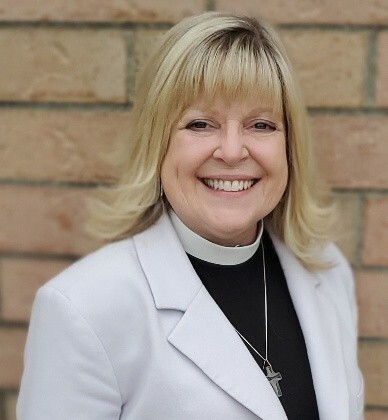
Bishop Shelley Bryan Wee | bishop@lutheransnw.org

-
Location